

Disclaimer: This article is based on publicly available data and analysis conducted for educational and awareness purposes. Readers are encouraged to verify all facts independently.
The name “Fai-rawbye” used in this article is a pseudonym and does not refer to any real company, individual, or organization. Certain identifiers, names, and materials have been altered or redacted to protect privacy while maintaining the integrity and accuracy of the investigative analysis. The purpose of this article is purely educational, aiming to raise awareness about general patterns observed in recruitment-based business models.
The analysis and opinions expressed here are those of the author, based on documents and information available at the time of writing. This content is not an accusation of illegality or wrongdoing by any real entity.
— — — — — — — — — — — — — — — — — — — — — — — — — — — — — — — — — — — — — —
Some months ago, when we started the StrawHat Hackers and the fire inside me burned high, I accidentally got into a potential scam at that time. It was a company called Fai-rawbye. One of my classmates was already a member, and I saw his WhatsApp status very regularly back then. But it wasn’t product-focused; it was sales-focused. Something inside me sparked; something felt wrong. This didn’t seem like a proper business.
However, I didn’t have enough evidence to convince myself or even my team. So I told my friends Sayanth and another ex-StrawHat member, Alwin, and we tried to find something through their website. What we found was that it was just a dummy site. I also tried talking to that specific classmate by pretending to be interested in joining the Fai-rawbye business part, and I even attended a Zoom meeting. Unfortunately, at that time, neither Sayanth nor Alwin could join the Zoom. Somehow, we didn’t continue the investigation and dropped it.
Then yesterday, on 4th November 2025, I checked that classmate’s profile again and saw the Fai-rawbye thing still going on. As you already know, we had just finished the article on the P. Marimmal case, and I wanted to do something more, to help others who might need it. So once again, we pulled the team into this. Now, we’re back on the case.
I researched them until 2 AM on 5th November 2025 and found some serious issues. And now, today, 5th November, 11:30 PM, I’ve found even more interesting things.
Before diving into the in-depth analysis, I want you all to first understand how a pyramid model scam works. Only then will you be able to grasp the core problem with this case. If you already know what a pyramid scheme is, you can skip directly to PART A of the article.
The pyramid model is a system where people earn money by recruiting others instead of selling real products. Each new member has to bring in more people to earn, which makes the structure grow endlessly. The problem is that this kind of growth cannot continue forever because the number of new recruits eventually runs out. Mathematically, it becomes impossible for everyone to earn since only those at the top get most of the money. For example, if each person recruits two others, by the 10th level, it would need over a thousand people. By the 20th level, it would require more people than the population of India. This shows that most participants will lose money because they will never find enough recruits. That is why pyramid models are unfair, unstable, and illegal in many countries.
PART A: The Business Model
The business presents itself as a legal “startup” in India. They claim to be the first company to receive an official Indian Startup Registration certificate for an MLM-style direct selling model. This is what they emphasize in their Zoom meetings.
They want people to join as direct sellers to sell their products. According to their own words, Fai-rawbye offers a wide range of products that we use in our daily lives. They promote this by saying that buying from them provides “greater advantages,” especially for those with lower incomes. Their pitch is that they sell “premium quality products at lower MRP compared to other premium brands.”
They claim that members can get these products 35% cheaper than the market price and can then sell them to earn a profit. They justify their pricing by saying they “don’t sell directly to customers” and can therefore reduce the MRP because they avoid spending on ads, marketing, and retail overheads.
However, their structure is not focused purely on product sales; it is built around recruitment. They say it is “like a team.” You don’t have to sell products to earn more money; instead, you can recruit two more people under you. You are restricted to only two direct recruits, and if you have more connections, those people will automatically be placed under your recruits, forming a binary structure.
When the sales volume of your left and right “legs” becomes equal, you receive a payout. For example, if your left side generates 30 points and your right side 100, you will only get paid for the 30. This is the exact binary compensation model, which has been declared illegal in India under the Prize Chits and Money Circulation Schemes (Banning) Act.
Before becoming a distributor, you have to start by purchasing products worth 25 sales volume (SV). They claim there is no entry fee, but this initial purchase acts as the real entry requirement.
In other words, while they advertise it as “free to join,” you cannot actually become a distributor or start earning without buying products first. This kind of structure is common in recruitment-based MLMs, where the mandatory purchase replaces a direct joining fee to make the model appear compliant with legal guidelines.
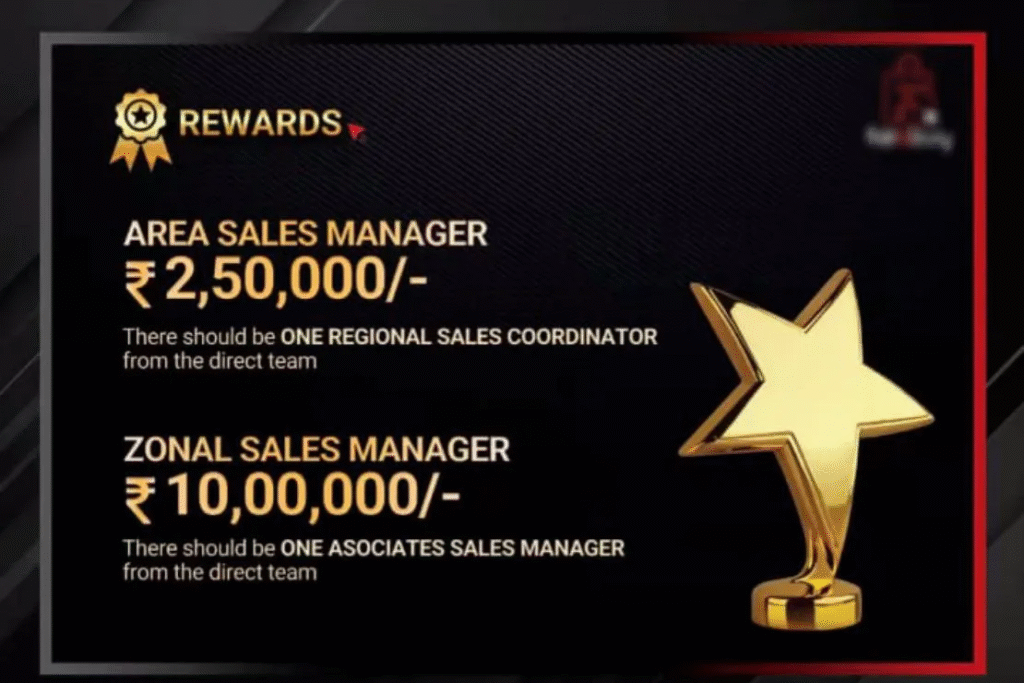
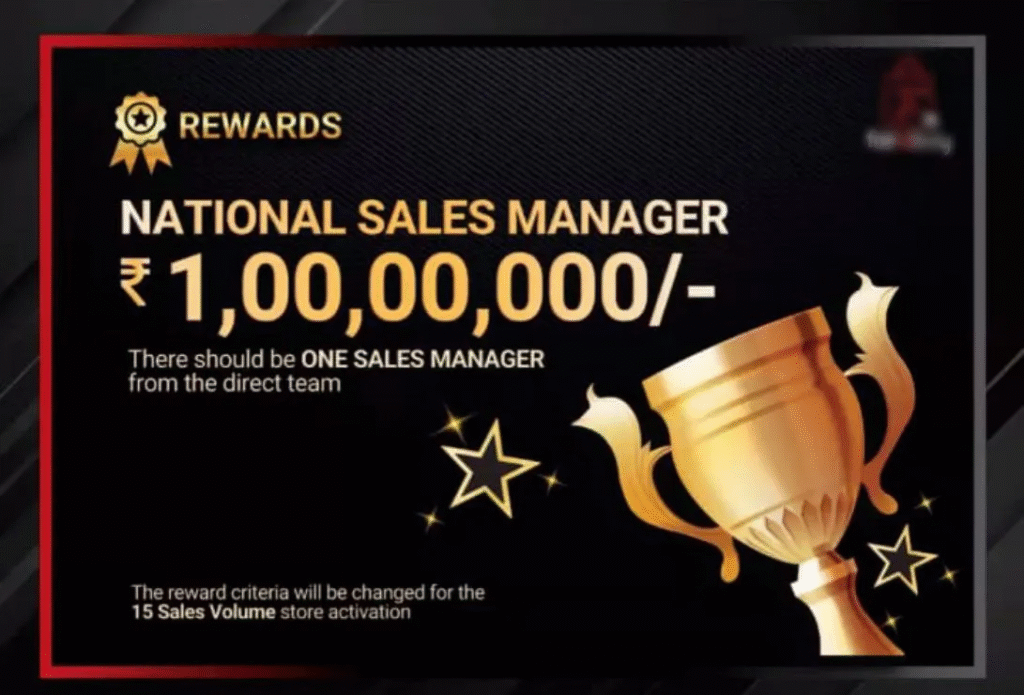
They also promote a ranking system, which determines your position and bonuses based on how large and active your downline (recruited members) becomes. I will explain more about that ranking system using their own presentation PPT, as it reveals even deeper issues within their so-called “business model.”:
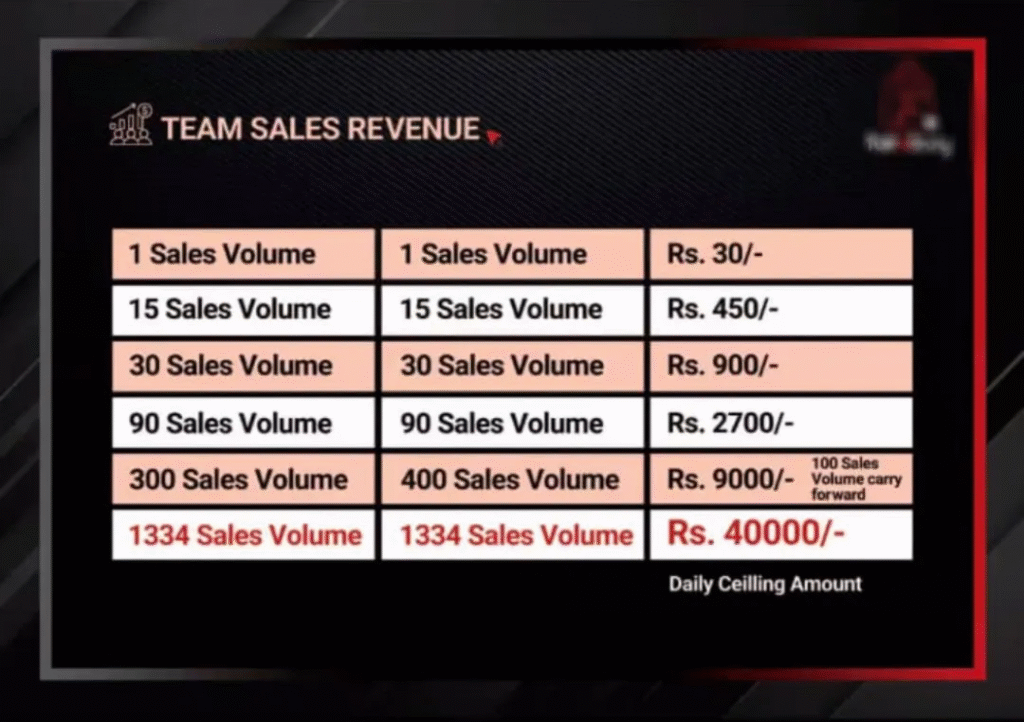
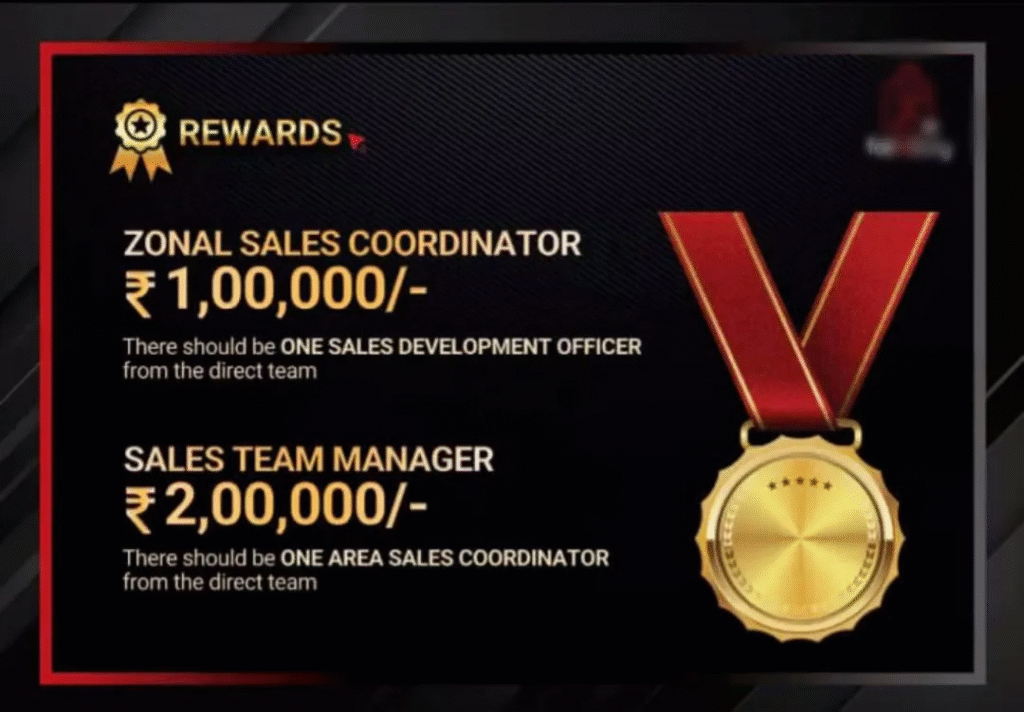
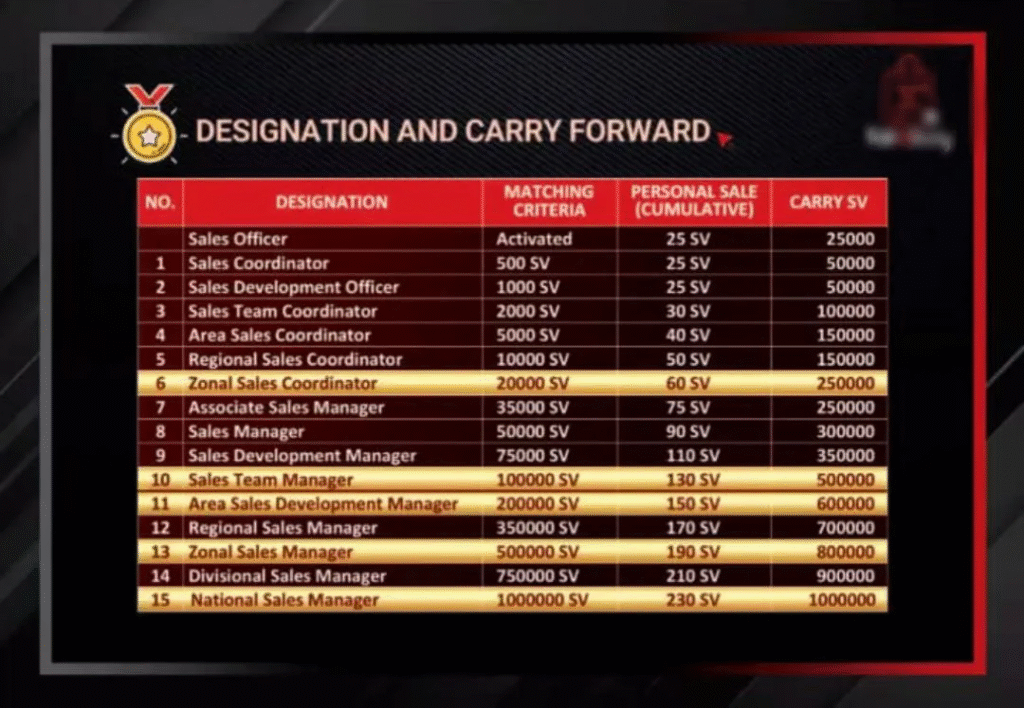
To become a Zonal Sales Coordinator, you must have one Sales Development Officer in your direct team. To have a Sales Development Officer in your direct team, that person must generate ₹9,000 in team sales revenue per month.
To become a Sales Team Manager, you must have one Area Sales Coordinator in your direct team. To be an Area Sales Coordinator, that person must have one sales member under them in a different position.
To reach the higher position of National Sales Manager, you must have one top Sales Manager under you. To achieve that, the Sales Manager must have one Associate Sales Manager under them, and to reach that level, the Associate Sales Manager needs one Regional Sales Coordinator under them. To become a Regional Sales Coordinator, they must have one Sales Coordinator under them.
It continues like this. You’ll get the idea. If there’s any confusion or doubt, refer to the PPTs. The main problem is that the last joined member needs to add more people to gain more success by rank pushing, which leads to the mathematical flaw in this model.
To camouflage their true intentions, they are using the narrative of selling daily-use products, but they are indirectly pushing you to recruit more people to earn. It is clear that there is an illegal binary structure, a pyramid structure, and a focus on team revenue rather than the product. Additionally, the daily-use products are quite useless. During our review we found very limited public evidence of retail sales to non-members on the site; available data suggests most activity is internal to the distributor network. I don’t think people will buy so-called “premium” products just because they claim to be premium while reducing their price compared to famous, genuine, and real products already available in the market.
Some pages and features on the site were non-functional at the time of review. The founder claims significant investment in the platform; however, the public-facing site does not reflect that claimed level of development.
In a three-episode podcast on a small YouTube channel run by one of their distributors, they are not even talking about the ranking system. In that podcast, they only discuss the “legal direct selling system.”
What do they promote on their Instagram and Zoom?

They are not promoting products; they are promoting how people found success using their business model. Most of their Instagram posts focus on supposed success stories, with only a few posts attempting to make it look genuine. On Zoom, it is completely different, and that is where they explain the business model to people, emphasizing success stories and their ranking system.
Some of the genuine reviews:
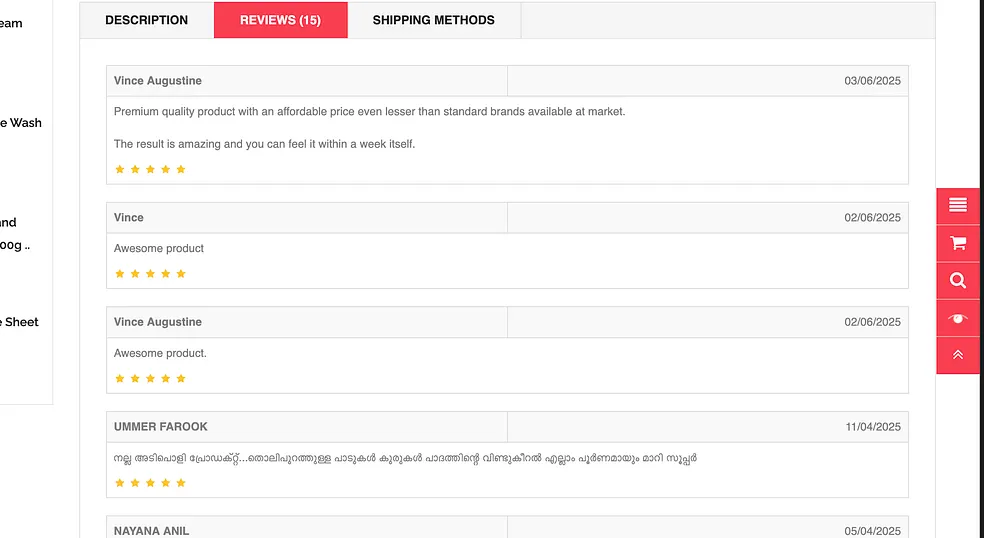
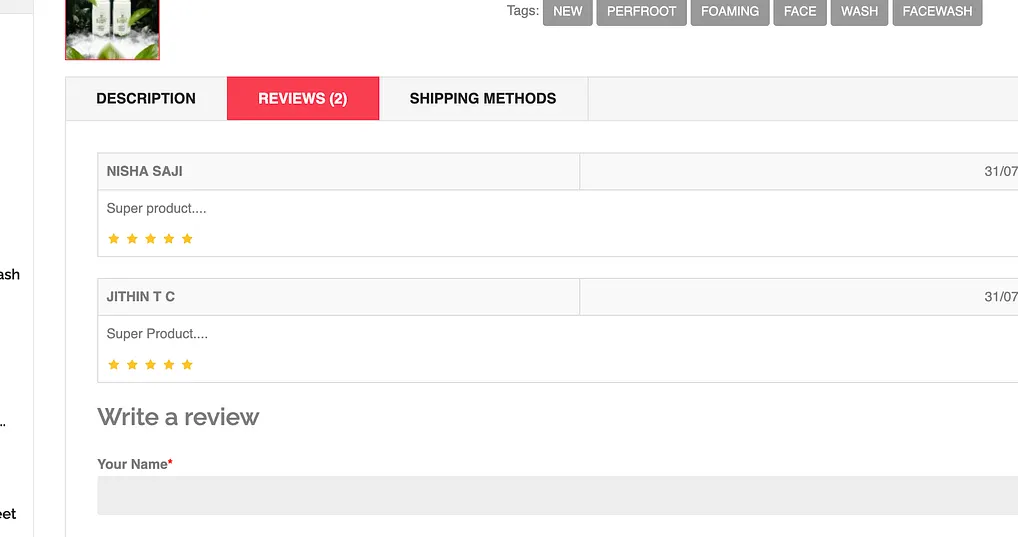
The reviews by Nisha Saji and Jithin T.C. don’t look the same, not even the dots in them.
They are promoting the business using the certificates they received from the government. One thing is clear: the company is not focusing on their product properly. If they were, they wouldn’t rely on this ranking system and binary structure; instead, they would focus on improving the product’s quality and reaching more people. If they truly want to be a genuine direct selling company, they should allow more people to join their site and sell their products. But remember, there are many competitors in this field, and removing the ranking system for recruitment would break their glorious promises, right?
PART B: Illegal and Problematic Parts of Fai-rawbye
Binary Structure (1:1 Matching Payout System)
- Issue: Members earn commissions only when the left and right team volumes match.
- Why It’s Illegal: This is the classic binary MLM model, banned under the Prize Chits and Money Circulation Schemes (Banning) Act, 1978.
- Reason: Income depends on continuously enrolling new people (recruitment) instead of selling to real customers.
2. Recruitment-Based Earnings
- Issue: Members are told they can earn more by adding two people under them, and those two must recruit more.
- Why It’s Illegal: Under the Consumer Protection (Direct Selling) Rules, 2021, no direct selling entity can reward or incentivize the recruitment of new participants.
- Result: This turns the business into a money circulation scheme, a pyramid.
Mandatory Initial Purchase (25 SV “No Entry Fee”)
- Issue: Members must buy products worth 25 SV to become distributors.
- Why It’s Illegal: The company falsely claims there’s “no joining fee,” but this forced purchase acts as an indirect entry cost.
- Violation: Rule 5(9) of the Direct Selling Guidelines, 2021; no company can require purchases or subscriptions as a condition to join.
Team Sales Revenue (Earnings from Downline Purchases)
- Issue: Members earn commissions from the purchases made by their recruits or their recruits’ teams.
- Why It’s Illegal: This constitutes a money circulation chain, where money flows upward from new entrants.
- Law Violated: Prize Chits and Money Circulation Schemes (Banning) Act, 1978, Sections 3 & 4
Misuse of Startup India Registration
- Issue: Fai-rawbye claims to be a “certified legal startup” under Startup India to gain public trust.
- Why It’s Misleading: Startup India registration does not validate business legality or model compliance. Using it as proof of legitimacy violates Section 2(47) of the Consumer Protection Act, 2019, under misleading representation.
Misleading Promotion and False Success Stories
- Issue: The company promotes success stories on Instagram and Zoom instead of its products.
- Why It’s Illegal: Under Rule 6(1) of the Direct Selling Guidelines, 2021, companies must not make false or misleading representations about potential earnings or business opportunities.
Concealment of True Income Source
Why It’s Problematic: This shows intentional concealment to appear compliant. It qualifies as deceptive business conduct under Section 2(28) of the Consumer Protection Act, 2019.
Issue: In public podcasts, they talk only about “legal direct selling,” avoiding mention of their ranking or binary income model.
These videos are publicly accessible as of November 2025 and are cited solely for documentary reference and analysis. The author has no affiliation with, or endorsement of, the creators or participants.
(Media Fair Use Note: linked or referenced content is used under fair-dealing provisions for commentary, review, and education. All copyrights remain with their respective owners.)
Part C: Conclusion
In short, based on the publicly available materials reviewed, Fai-rawbye’s structure appears consistent with features commonly associated with pyramid or money-circulation schemes. Its promotional language appears to attract members with promises of financial freedom that resemble recruitment-based models. The StrawHat Hackers’ investigation into this case is not just about exposing one company; it’s about spreading awareness, encouraging digital vigilance, and protecting others from becoming the next victims of scams hidden behind the mask of entrepreneurship.
Stay alert. Question everything. The smarter we investigate, the fewer people they can exploit.
Corrections or Clarifications: If any party believes this article contains factual inaccuracies, don’t hesitate to get in touch with lumirsvinod@gmail.com. Verified corrections will be published promptly.